
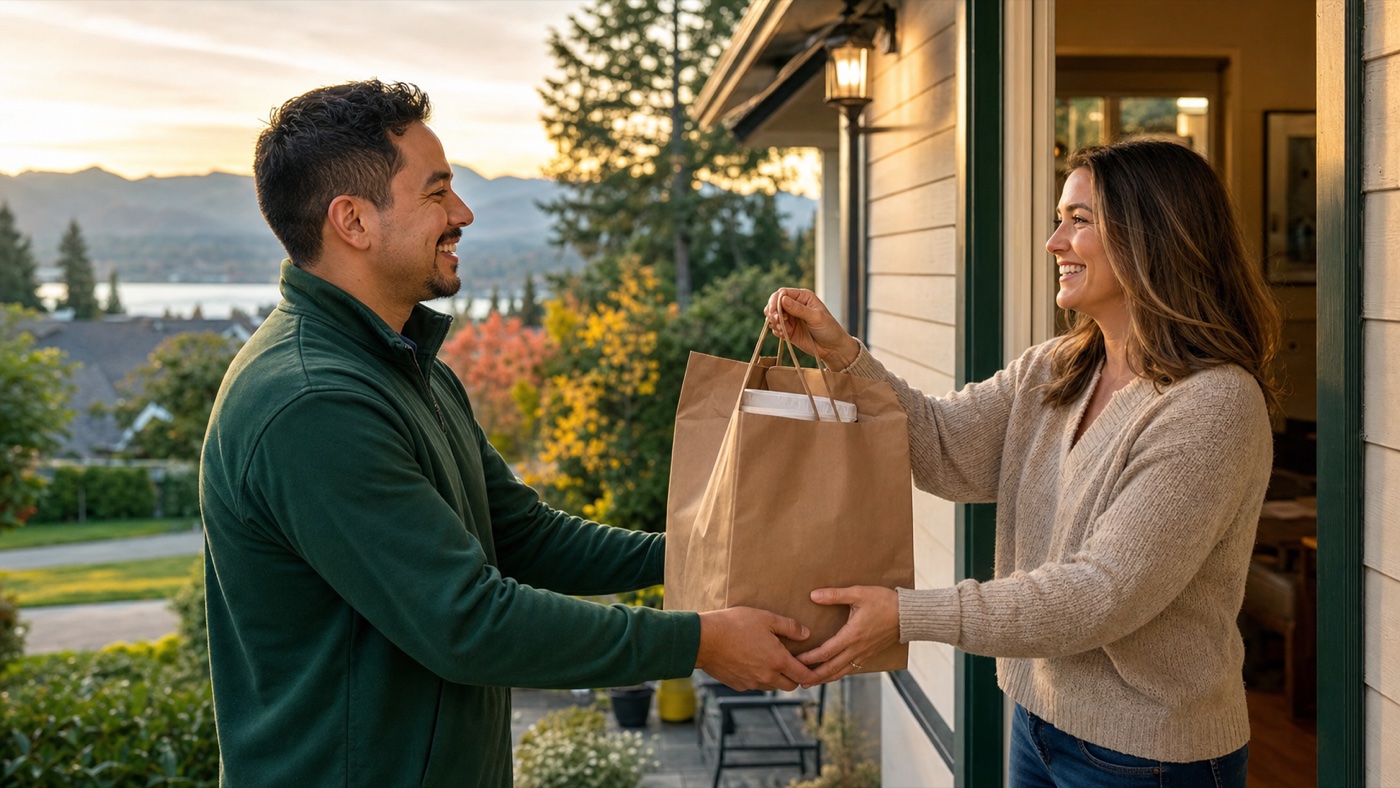
When people think about delivery, speed is often the first thing that comes to mind. Fast service matters, but a great local delivery experience depends on much more than how quickly a driver reaches the door.
Every delivery connects three groups: the customer placing the order, the restaurant preparing it, and the driver completing the handoff. When each person has clear information and knows what to expect, the entire experience becomes smoother.
As Skagit Dash prepares for launch, these are seven things we believe matter when building a dependable local delivery experience.
1. Clear information before the delivery begins
A smooth delivery starts before anyone gets in a car.
Customers need accurate information about availability, service areas, expected timing, and how to request help. Restaurants need clear order details and pickup instructions. Drivers need the information required to locate the restaurant, identify the correct order, and complete the delivery responsibly.
Unclear information creates avoidable delays. Clear information helps everyone make better decisions from the beginning.
2. Honest timing instead of unrealistic promises
Customers appreciate speed, but they also value estimates they can trust.
Preparation time, traffic, weather, delivery distance, restaurant volume, and address access can all affect a delivery. A responsible delivery service should communicate realistic expectations instead of promising a time it may not be able to meet.
When timing changes, an early and honest update is more helpful than silence.
3. A thoughtful restaurant-to-driver handoff
The pickup is one of the most important moments in any delivery.
Restaurant staff should have a clear way to identify the driver and confirm the correct order. Drivers should know where to wait, how to communicate respectfully with staff, and what to do if an order is not ready.
A well-organized handoff protects the restaurant’s workflow and gives the driver a better start. It also reduces the chance of missing items, confusion, or unnecessary interruptions during a busy shift.
Restaurant owners can read more about how Skagit Dash plans to support local restaurants.
4. Communication before a small problem becomes a big one
Even a carefully planned delivery can run into an unexpected issue. A restaurant may need more preparation time. A driver may encounter traffic. A customer’s address may be difficult to locate.
The difference between a manageable delay and a frustrating experience is often communication.
Customers should not have to wonder whether anyone noticed a problem. Restaurants should know how to share an update. Drivers should have a clear path for reporting an issue and asking for support.
5. Careful handling from pickup to drop-off
The goal is for food to arrive as close as possible to the condition the restaurant intended.
That means paying attention to packaging, keeping the order stable during transport, following reasonable handling instructions, and avoiding unnecessary stops or delays. It also means recognizing that different orders may require different care.
Driver preparation plays an important role. The Skagit Dash Driver Academy is being developed to establish clear expectations before drivers begin serving customers.
6. Respect for everyone involved
Local delivery is a people-centered service.
Restaurant teams may be working through a rush. Drivers may be navigating unfamiliar locations. Customers may be waiting with children, managing mobility needs, or ordering after a long day.
Patience, kindness, and professional communication matter at every step. They help solve problems faster and make the experience feel local rather than anonymous.
Those values are central to the Skagit Dash Promise: be clear, be kind, and be dependable.
7. A willingness to learn and improve
No delivery system becomes excellent on its first day.
A careful launch should create room to test workflows, collect feedback, identify patterns, and improve. Customer comments, restaurant observations, driver experiences, and operational records can all help reveal where a process is working and where it needs attention.
The goal is not to pretend every delivery will be perfect. The goal is to respond responsibly, learn consistently, and build a better local service over time.
Great delivery is a shared experience
Speed will always matter, but it is only one part of the experience. Clear expectations, careful handoffs, reliable communication, thoughtful handling, mutual respect, and continuous improvement are what help local delivery earn trust.
Skagit Dash is building these principles into its launch planning because customers, restaurants, and drivers all deserve a process they can understand.
If you would like to follow the journey, visit Skagit Dash and join the launch list for future updates.